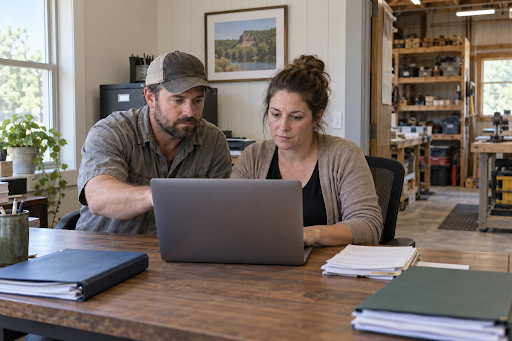



Good Recordkeeping Starts with Small, Consistent Habits
Keeping organized financial records doesn’t just make tax season easier—it helps you better understand your business throughout the year.
When your records are accurate and easy to find, preparing tax returns, answering financial questions, or responding to requests for documentation becomes much less stressful.
The good news is that good recordkeeping doesn’t have to be complicated. A few consistent habits can save hours of work later.
At OBS Financials, we help businesses throughout Rogers and Northwest Arkansas create organized bookkeeping systems that support accurate financial reporting, tax preparation, and long-term success.
Keep Business and Personal Finances Separate
One of the easiest ways to improve your recordkeeping is by separating business and personal finances.
Use dedicated business accounts for:
- Business checking
- Business savings
- Business credit cards
- Business payment platforms
Keeping personal purchases separate reduces confusion and makes bookkeeping much more accurate.
Reconcile Your Accounts Every Month
Monthly reconciliations help ensure your bookkeeping matches your actual bank and credit card activity.
Each month, compare your records with:
- Bank statements
- Credit card statements
- Loan payments
- Payment processor reports
Reviewing your accounts regularly helps identify missing transactions or errors before they become larger problems.
Save Digital Copies of Important Documents
Paper receipts can easily become lost or damaged.
Whenever possible, keep digital copies of:
- Receipts
- Invoices
- Vendor bills
- Bank statements
- Tax documents
Using organized digital folders or secure accounting software makes retrieving records much easier when they’re needed.
Add Notes to Business Expenses
Sometimes a receipt alone doesn’t explain why a purchase was made.
Adding a short note can provide helpful context later.
For example, include:
- The business purpose
- The client or project
- Meeting details, if applicable
- Any other relevant information
Small notes today can eliminate questions months or even years later.
Create an Organized Filing System
Your recordkeeping system doesn’t need to be complicated—it simply needs to be consistent.
Organize financial records by categories such as:
- Income
- Expenses
- Payroll
- Tax documents
- Vendor information
- Bank statements
Choose a system that’s easy for you to maintain throughout the year.
Track Contractor Information
If your business works with independent contractors, keep their records organized from the beginning.
Maintain items such as:
- W-9 forms
- Payment records
- Contractor agreements
- Year-end tax documents
Keeping these records current can make year-end reporting much simpler.
Know What Records to Keep
Different financial documents should be kept for different periods of time.
Rather than guessing what to save, work with your bookkeeping or tax professional to understand appropriate record retention guidelines for your business.
Having a consistent retention policy helps reduce clutter while ensuring important records remain available when needed.
Make Recordkeeping Part of Your Routine
The best recordkeeping systems aren’t built during tax season.
Instead, spend a little time each week or month:
- File new receipts.
- Review transactions.
- Organize digital documents.
- Reconcile accounts.
- Back up important records.
Small, consistent habits are often much easier than trying to organize an entire year’s worth of paperwork at once.
Frequently Asked Questions
Why is good recordkeeping important?
Accurate records make it easier to prepare tax returns, monitor business performance, and locate important documents when questions arise.
Should I keep digital copies of receipts?
Many businesses choose to store digital copies because they’re easier to organize, search, and retrieve than paper records.
How often should I reconcile my accounts?
Monthly reconciliations are a good practice for most businesses because they help identify errors before they become larger issues.
Should I mix personal and business expenses?
Keeping business and personal finances separate generally makes bookkeeping, financial reporting, and tax preparation much more accurate and manageable.
Stay Organized All Year Long
Good recordkeeping isn’t about creating extra paperwork—it’s about making your financial information easier to manage.
By separating business finances, reconciling accounts regularly, organizing documents, and building simple routines, you’ll spend less time searching for records and more time focusing on your business.
At OBS Financials, we’re proud to help businesses throughout Rogers, Bentonville, Springdale, Fayetteville, and Northwest Arkansas build bookkeeping systems that simplify tax preparation, improve financial organization, and support confident business decisions.